
- COMMERCIAL GARAGE DOOR REPAIR
- GARAGE DOOR OPENER INSTALLATION
- GARAGE DOOR SPRING REPAIR
- SAME-DAY GARAGE DOOR REPAIR
- CUSTOM GARAGE DOOR
- GARAGE DOOR OPENER REPAIR
- GARAGE DOOR TRACK REPAIR
- GARAGE DOOR CABLE REPAIR
- GARAGE DOOR PANEL REPAIR
- LOCAL GARAGE DOOR REPAIR
- GARAGE DOOR REPLACEMENT
- NOISY GARAGE DOOR FIX
- GARAGE DOOR INSTALLATION
- GARAGE DOOR SECTION REPLACEMENT
- OVERHEAD GARAGE DOOR REPAIR
- GATE REPAIR
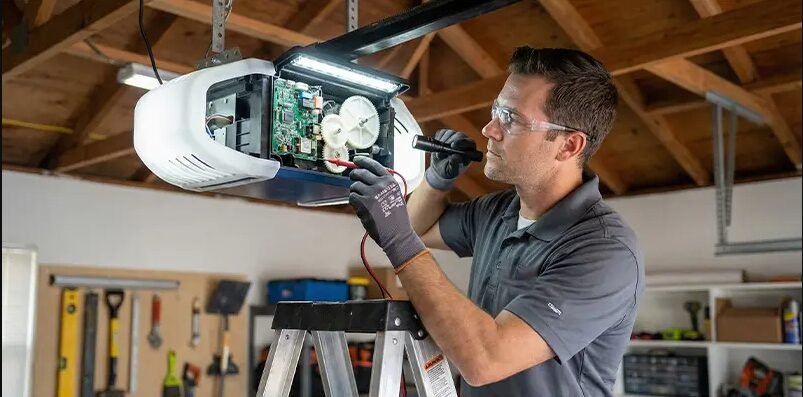
Grinding, Humming, or Squeaking? Diagnosing Your Garage Door Opener Repair
Your garage door speaks to you every time you press the remote, but it doesn’t always use a pleasant tone. When your once-quiet entrance starts emitting rhythmic thumps, high-pitched squeals, or a low-frequency buzz, it is signaling a mechanical struggle. Ignoring these auditory warnings often leads to a total system failure at the most inconvenient moment possible.
At Sun City Center Florida Garage Door Repair, we know that identifying these specific sounds early allows you to pinpoint exactly which component requires a garage door opener repair before a small annoyance turns into an expensive emergency. By listening closely to the mechanical “language” of your door, you can take control of your home’s maintenance and ensure your family stays on schedule.
Deciphering the Symphony of Mechanical Failure
A healthy garage door should operate with a consistent, smooth hum. Any change indicates friction, misalignment, or electrical fatigue. Because the opener works with springs, tracks, and rollers, the sound acts as a diagnostic map for the entire system.
The Tell-Tale Signs of Friction and Wear
A piercing squeak or grinding noise usually points to poor lubrication or worn rollers. A “metal-on-metal” screech suggests you should check the tracks and rollers first. Steel rollers grow noisier as internal bearings lose grease and shave off metal flakes. If heavy grinding comes from the motor, you likely have a stripped drive gear. This often happens in chain-drive systems when the internal plastic gear wears down.
A “clunking” or “banging” sound suggests a loose chain or a dented track. A sagging chain slaps against the rail, creating jarring vibrations. You can often resolve these issues by tightening the tension. Replacing old steel rollers with nylon versions also helps, as they absorb shock and operate quietly.
Electrical Humming and Motor Struggles
If the wall button triggers a low hum without movement, the motor is likely stalled. A humming motor often indicates a blown capacitor. The capacitor provides the “kick” needed to start the heavy lifting. Without this surge, the motor simply vibrates in place.
Sync Issues and Mechanical Failure
A hum followed by a click may mean travel limits are out of sync. The opener “thinks” the door is already at its destination and refuses to move. In other cases, a hum means the door is too heavy due to a broken spring. Never ignore a motor that hums without moving. The resulting internal heat can melt the plastic housing or fry the logic board, forcing a full replacement.
Restoring Silence to Your Home
Your garage door should serve as a silent servant, not a neighborhood nuisance. While basic lubrication solves minor squeaks, deeper grinding and humming require a technical eye to prevent total motor burnout. Consistently maintaining these parts extends the life of your hardware and keeps your morning routine peaceful.
Don’t wait for the noise to stop because the motor finally died. Professional garage door opener repair addresses the root cause of the friction or electrical failure, saving you from a trapped car or a broken door. If your system is currently making frightening noises, Sun City Center Florida Garage Door Repair offers the expert diagnostics and precision tools to quiet the chaos. We restore the smooth, reliable operation you expect, ensuring your garage remains the most dependable entry point to your home.